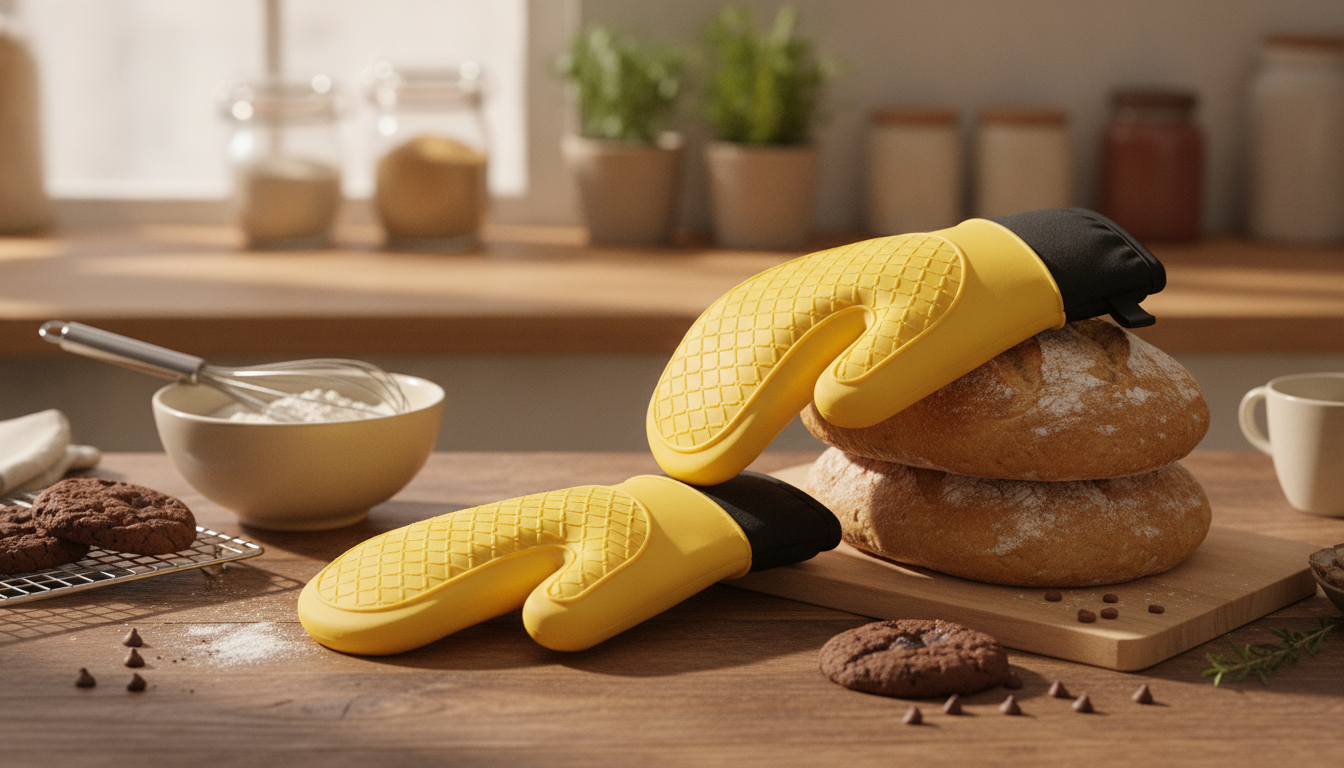
Hot trays, bubbling casseroles, and cast-iron handles demand protection that won’t slip at the worst moment. Insulated silicone oven gloves combine a grippy outer layer with insulating material to help reduce heat transfer while keeping control over heavy cookware. The result is a more confident hold when you’re pulling a sheet pan from the back of the oven, lifting a Dutch oven lid that’s dripping with steam, or repositioning a roasting rack without fumbling.
Not all “heat-resistant” hand protection feels the same in real kitchens. Insulated silicone gloves stand out because they’re built for both traction and comfort during brief, high-heat handling.
Small design details matter when you’re holding something heavy, hot, and awkwardly shaped. Use the criteria below to compare options and choose a pair that fits the way you cook.
| Feature | Why it matters | What to prioritize |
|---|---|---|
| Heat resistance | Reduces burn risk during brief contact with hot surfaces | Higher rating + clear use guidance for contact time |
| Cuff length | Protects wrists/forearms when reaching into ovens or over grills | Longer cuffs for roasting and grill work |
| Grip texture | Prevents slips with heavy pans and glass dishes | Raised silicone pattern on palm and fingers |
| Insulated lining | Improves comfort and slows heat transfer | Thicker, secure lining that won’t bunch up |
| Dexterity | Better control for racks, lids, and smaller bakeware | Five-finger gloves if frequent repositioning is needed |
| Care/cleanup | Food oils and smoke residue build up quickly | Easy-to-wipe silicone; washable design if possible |
Insulated silicone gloves earn their keep on busy cooking days because they combine a steady grip with easier maneuvering. They’re especially handy when you’re juggling multiple dishes and moving quickly.
For food safety, remember that protective gloves are only one part of a safe kitchen setup. Using a thermometer to confirm doneness is a reliable way to prevent undercooking—see the USDA’s guidance on kitchen thermometers at USDA FSIS.
Good gloves last longer when they’re kept clean and fully dried—especially after smoky grill sessions or sticky marinades.
General cooking safety habits also matter—especially around crowded stovetops and hot oil. The National Fire Protection Association (NFPA) shares practical tips for reducing common kitchen fire risks.
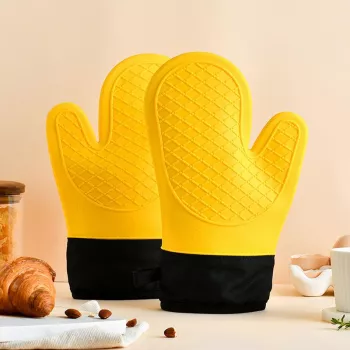
If a secure, non-slip hold matters as much as heat protection, Insulated Silicone Heat-Resistant Oven Gloves are designed to pair a grippy silicone exterior with insulation for more comfortable handling of hot cookware. They’re well-suited for everyday tasks like removing trays, moving roasting pans, and adjusting oven racks—especially when you want finger control rather than a bulky mitt.
Yes for many tasks, especially gripping tools and briefly handling hot items, but avoid prolonged contact with very hot metal and keep away from direct flames. Contact time and distance from the heat source make a big difference.
Wet gloves can increase burn risk because moisture and steam conduct heat quickly. Keep them as dry as possible and use extra caution when lifting lids or working near boiling liquids.
Lifespan depends on heat exposure, cleaning, and wear. Replace gloves if silicone cracks or tears, seams loosen, or the lining compresses so much that insulation performance drops.


Leave a comment